Amazon case study
SwissGear on Amazon
Listings, content, images, ads and reviews for a 1,000+ SKU travel brand on Amazon.ca.
Listings, content, images, ads and reviews for a 1,000+ SKU travel brand on Amazon.ca.
SwissGear sells luggage, backpacks and travel accessories in Canada through its own site, national retailers and Amazon.ca. On Amazon, shoppers compare dozens of near-identical suitcases and backpacks in a few seconds, so every listing has to answer the questions a store associate would: what size is it, will it fit the overhead bin, what makes it better than the one next to it.
I ran the SwissGear presence on Amazon.ca alongside the Shopify Plus storefront, keeping a catalogue of more than 1,000 SKUs accurate and consistent across both channels, and building the listings, content, advertising and review programs that helped it sell.
Every product started with a clean listing: the right parent and child variations for colours and sizes, complete structured attributes, and titles, bullets and descriptions written to one standard across the range.
With more than 1,000 SKUs, most of that work ran through bulk upload templates rather than one listing at a time, and I worked with SwissGear’s eContent partners so Canadian product information, pricing and imagery matched what shoppers saw on the website and in stores.

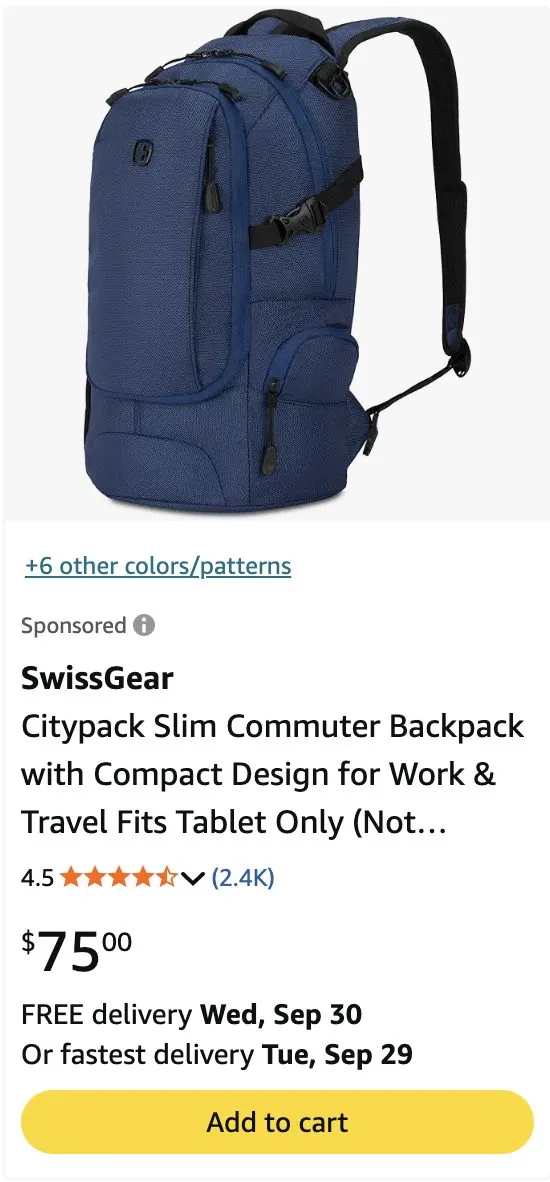
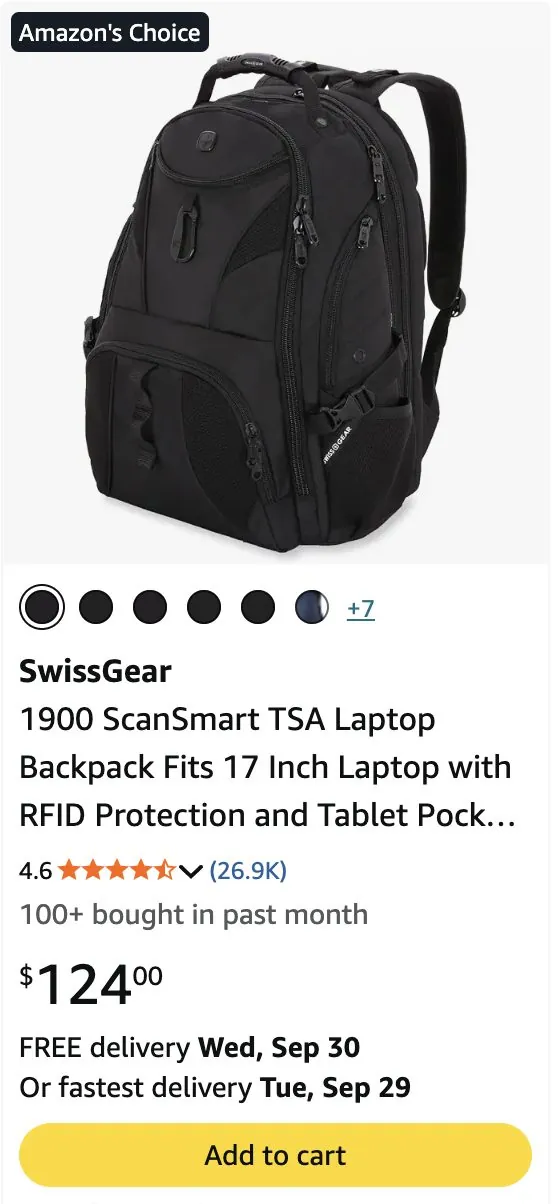
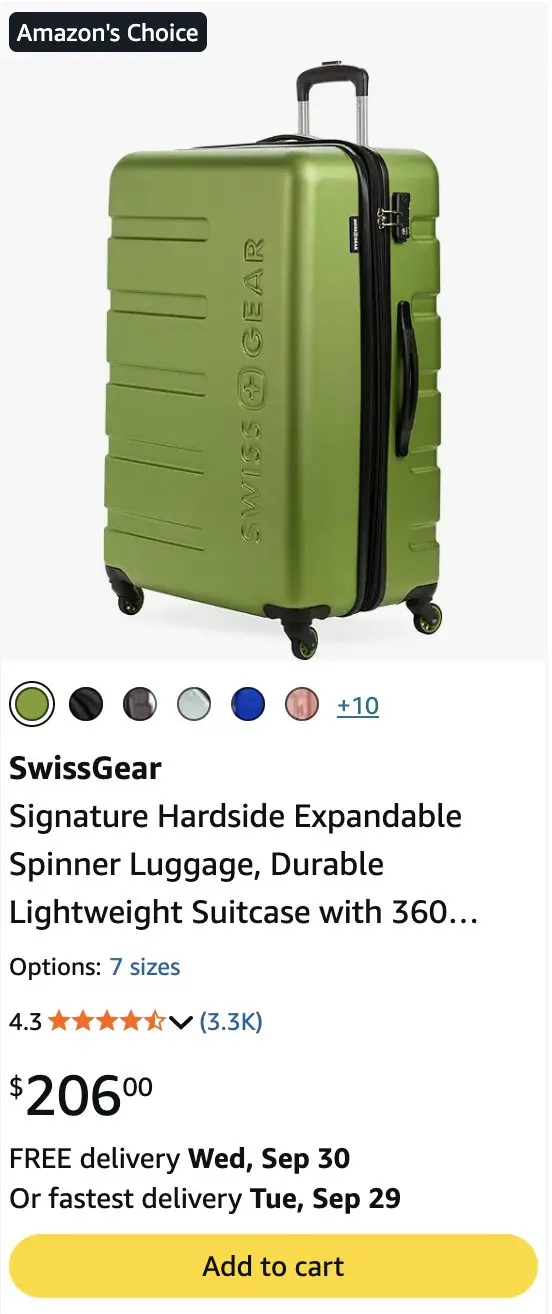
Luggage shoppers search by size, airline rule and feature, not by product name. I built keyword lists from Amazon search term data, competitor listings and customer reviews, then mapped the terms to each product type so titles and bullets led with what people actually typed.
Backend search terms picked up the rest: synonyms, alternate spellings and the long-tail phrases that did not fit naturally in the copy. Listings were reviewed after every launch and promotion, and rewritten when a term started converting.
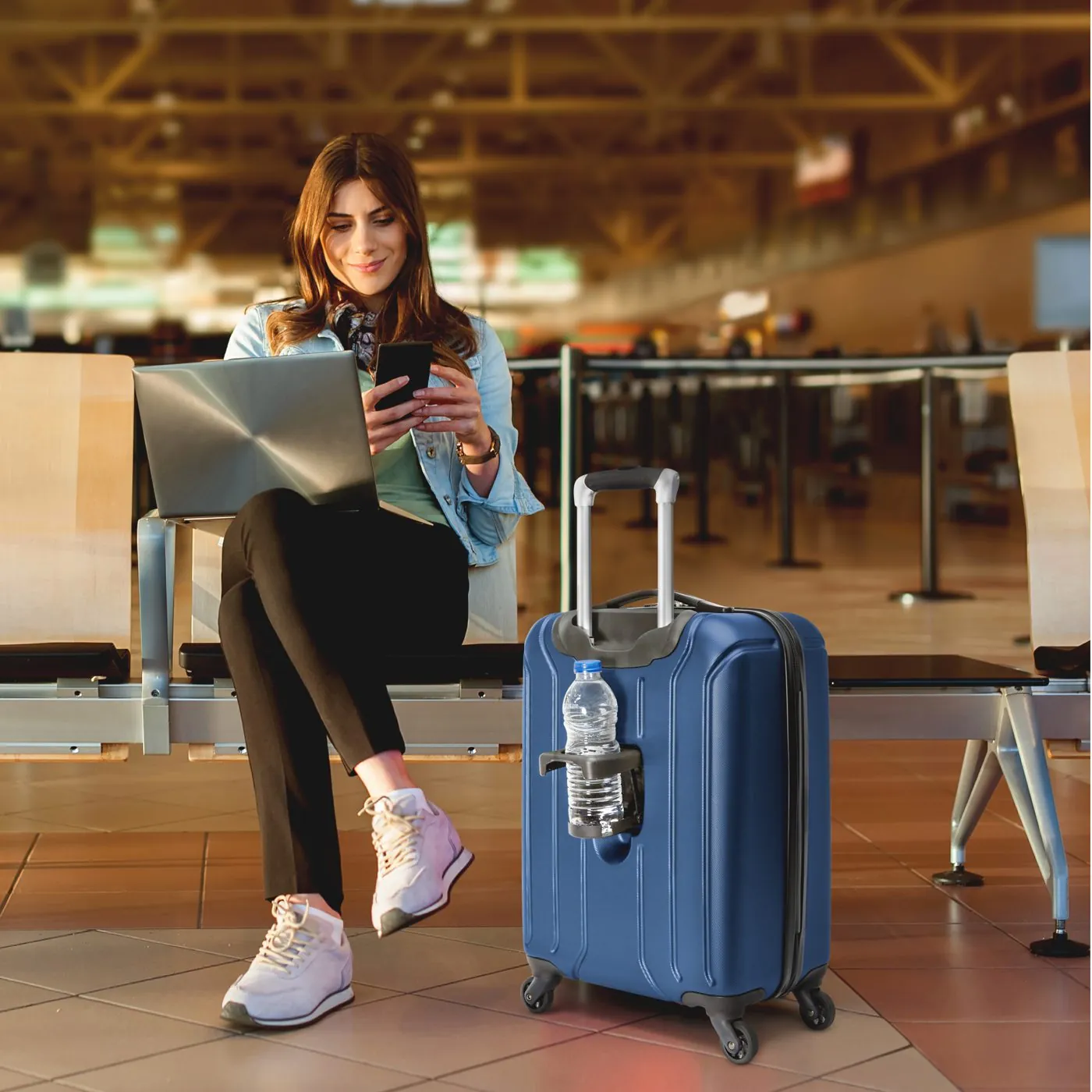

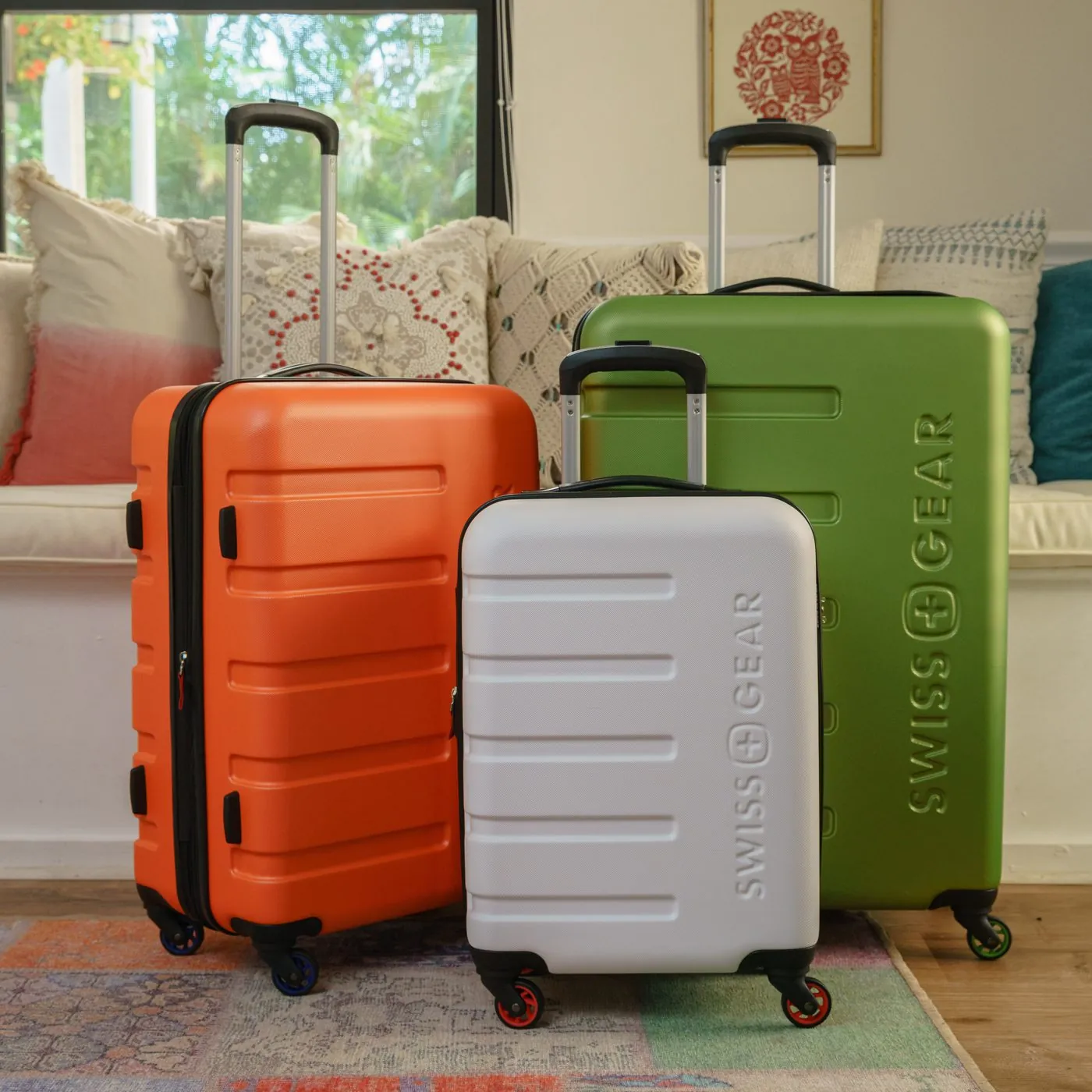
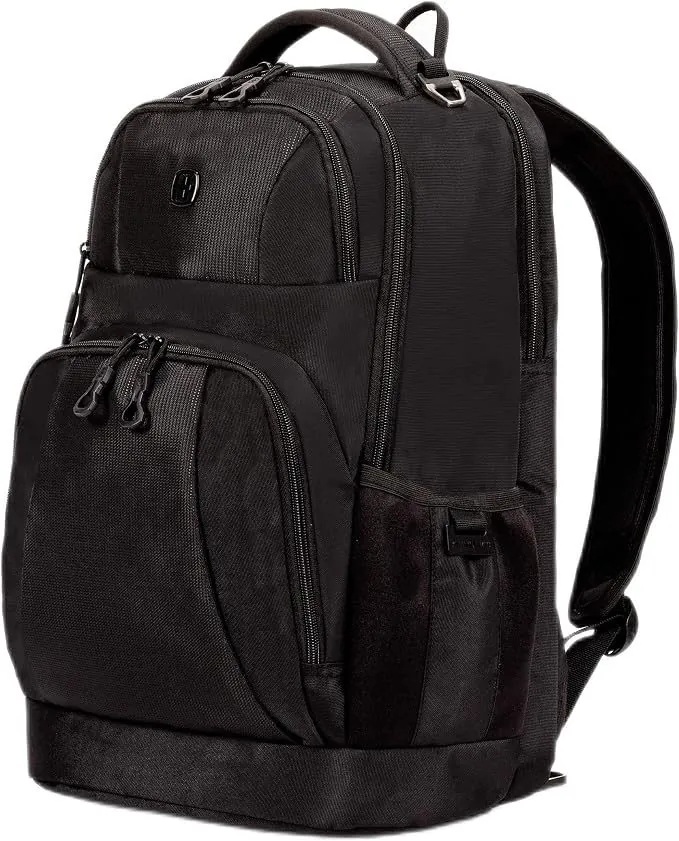
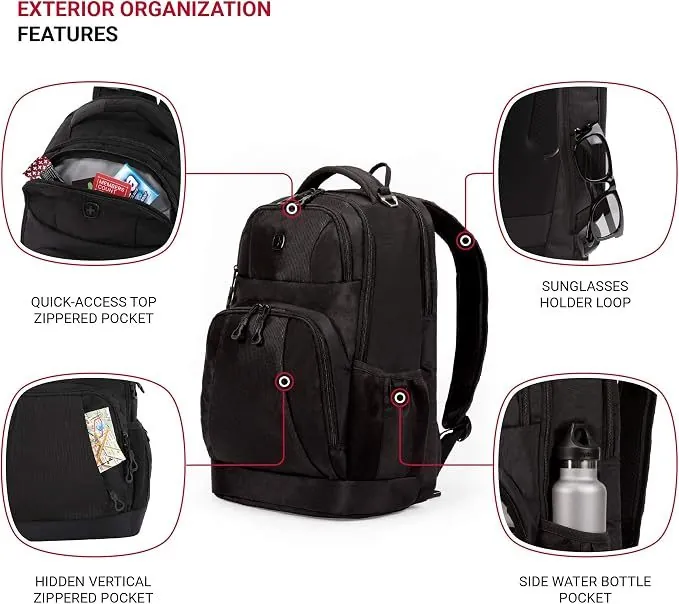
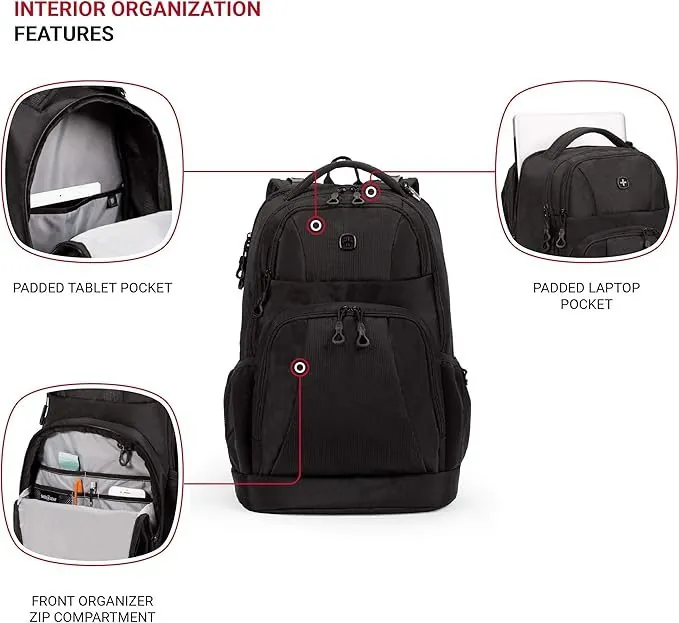
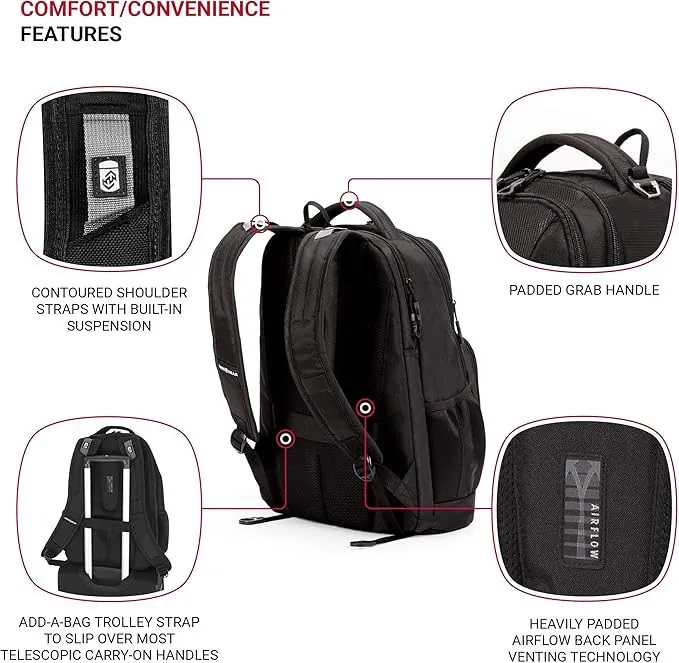
On Amazon the image stack does most of the selling, so I briefed and art-directed a full set for each hero product: a clean main image on white, then infographics that answer the questions shoppers ask in reviews.
Dimensions against airline limits, what fits inside, lock and wheel close-ups, USB charging, RFID pockets, size comparisons on real figures and lifestyle shots that show the product in use. The same set was reused on the website so the brand looked the same everywhere.
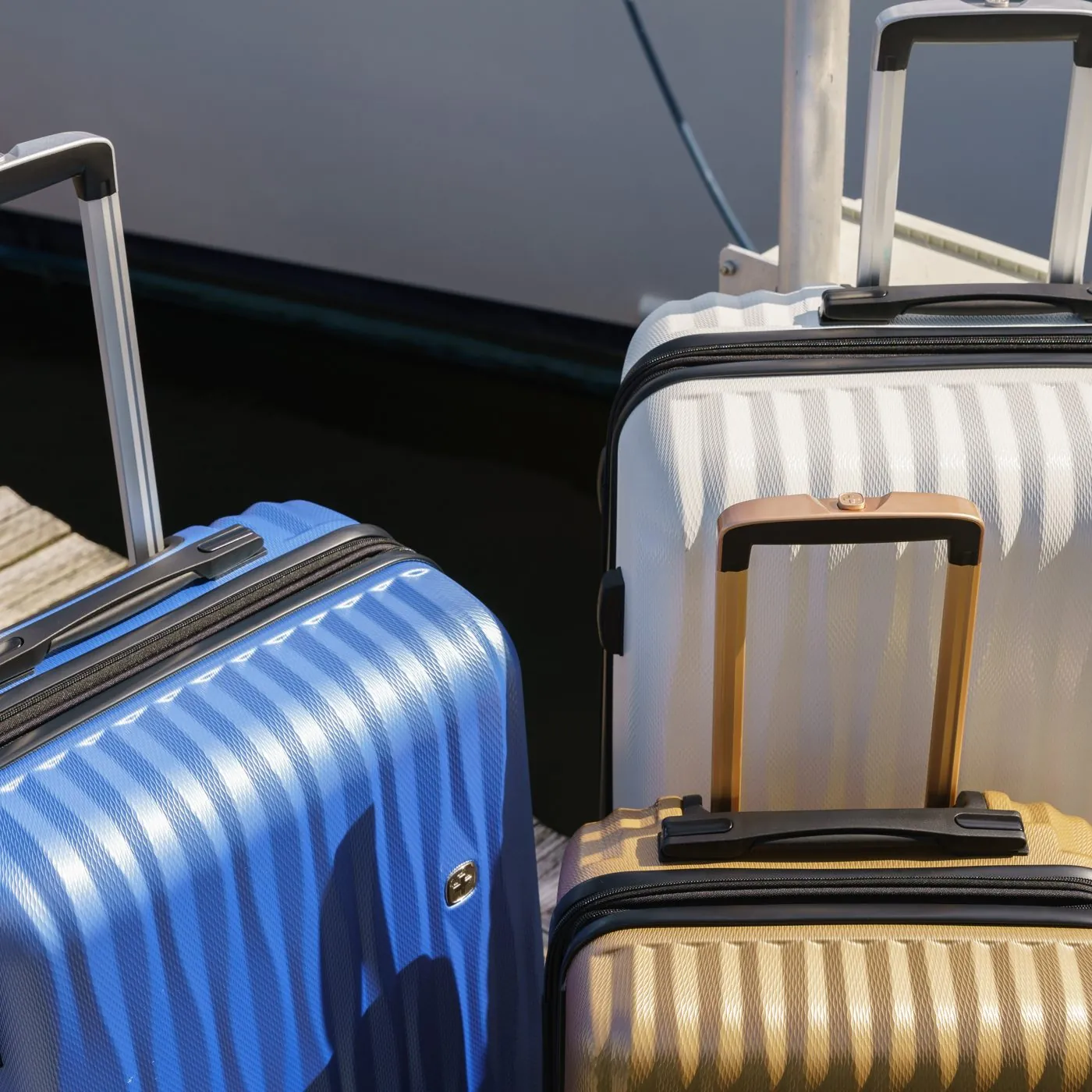
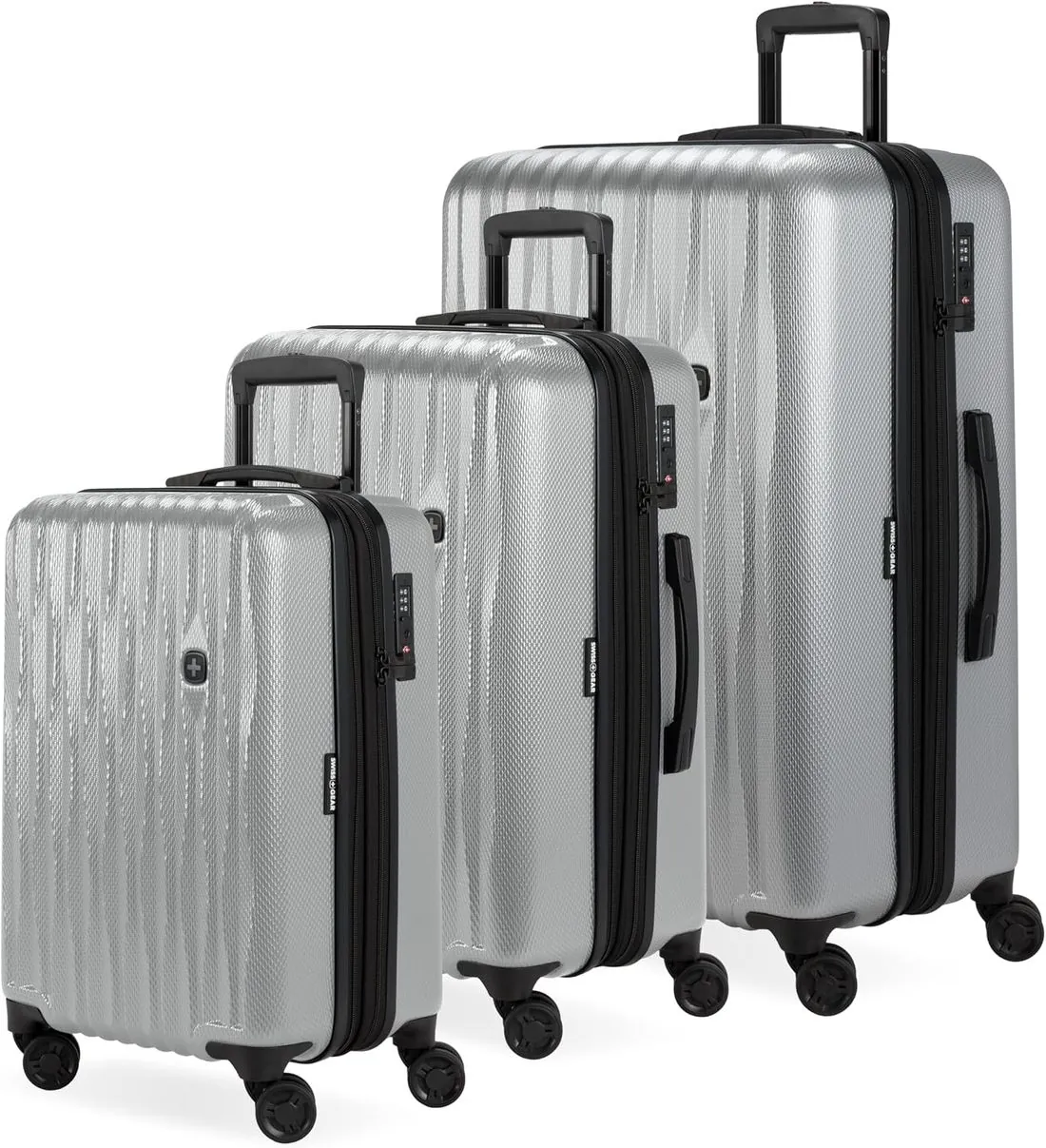
A+ content turned the description area into a brand page: modules that tell the SwissGear story, explain the construction and materials, and close with comparison charts that point shoppers to the right size or the matching piece in the collection.
Cross-sell was built in on purpose. A shopper looking at a carry-on sees the medium and large, and a backpack buyer sees the matching travel accessories, which helped lift units per order.
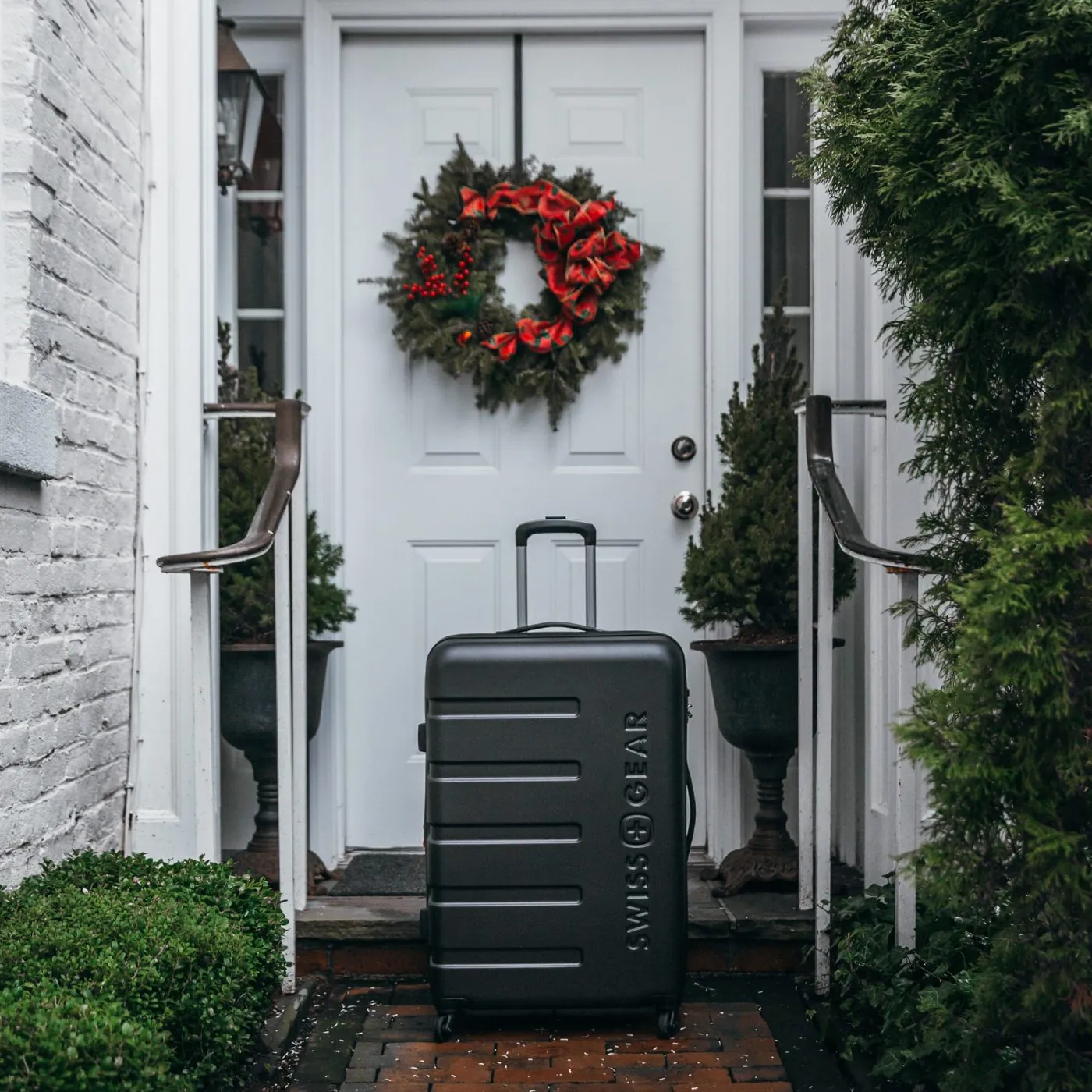

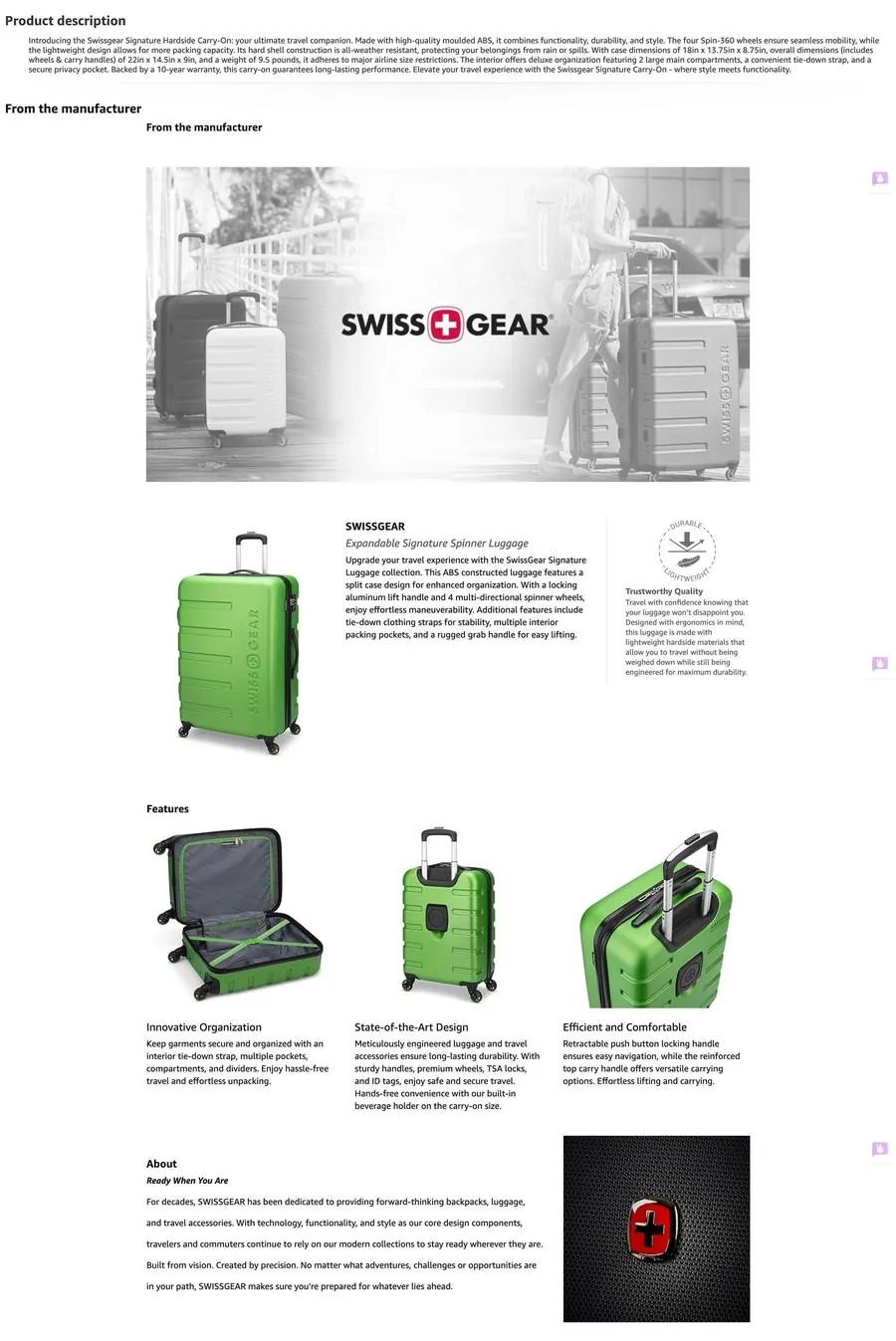
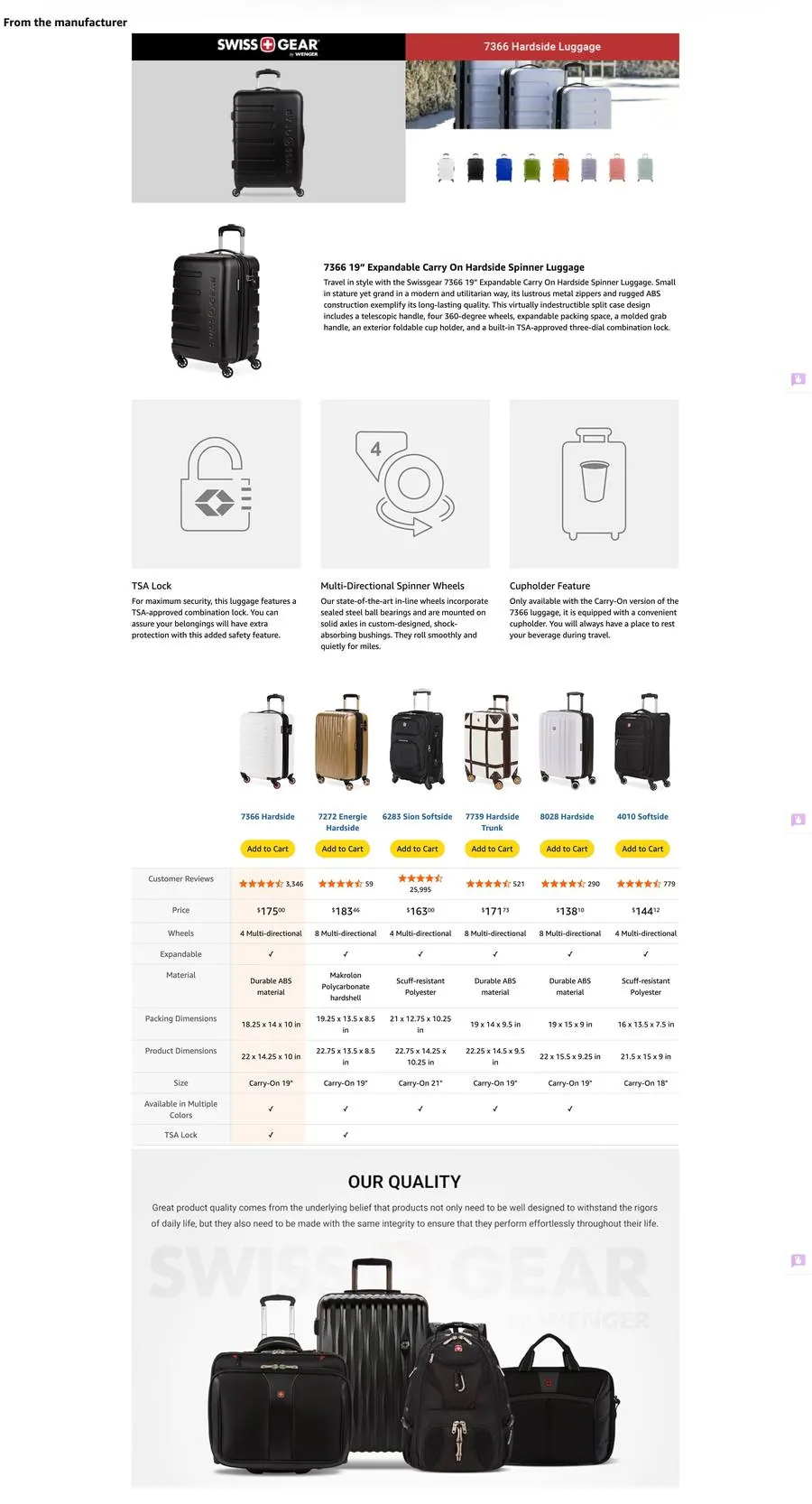
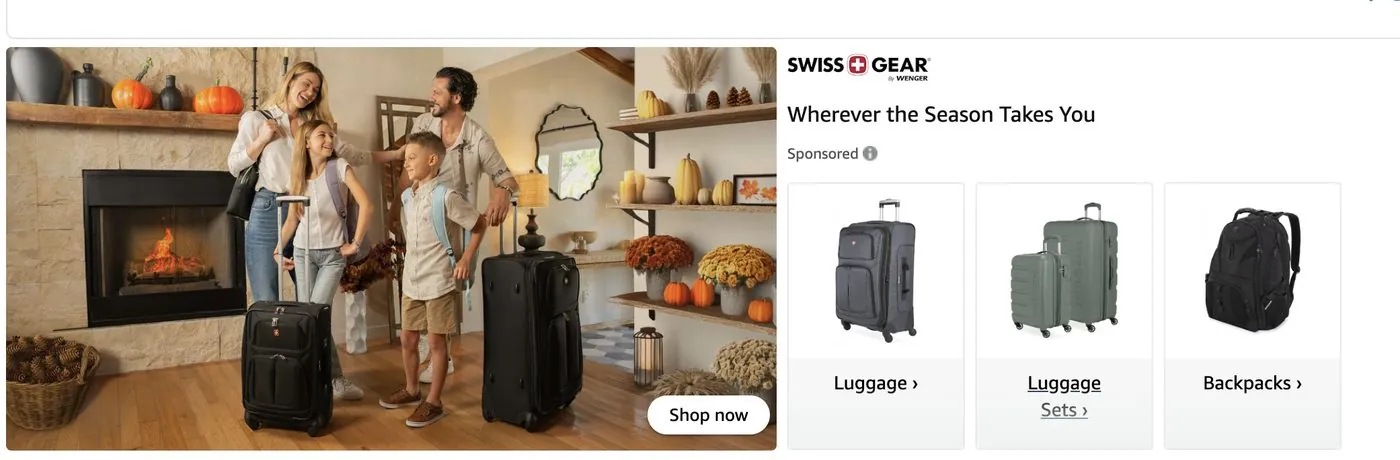
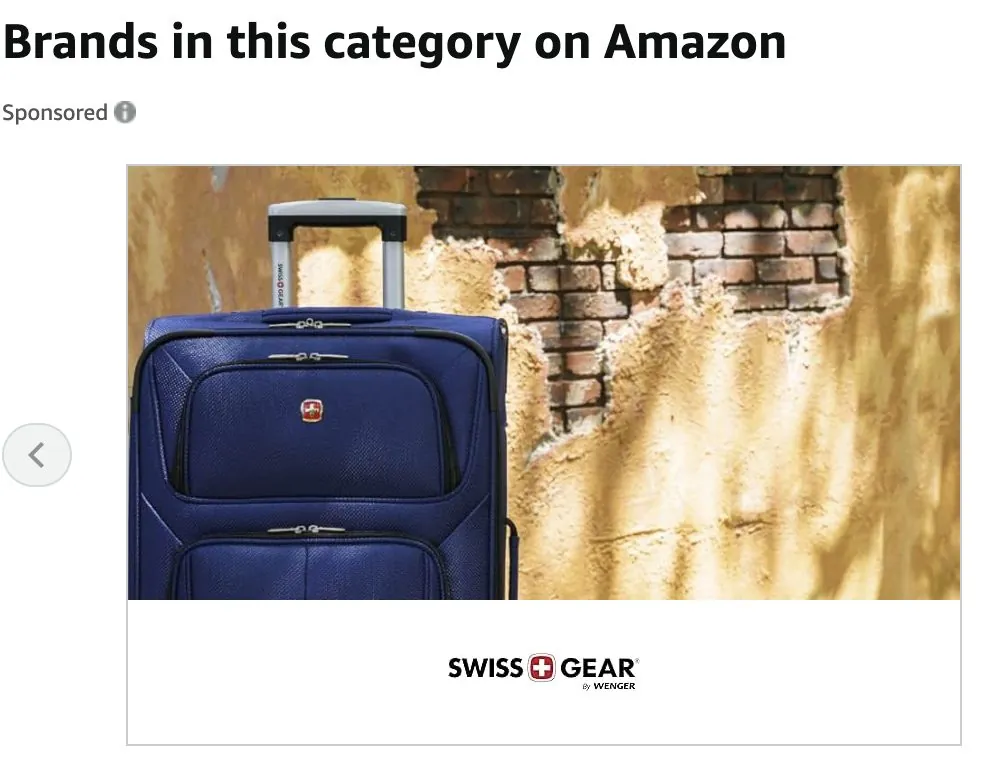
The SwissGear Brand Store is the destination for every Sponsored Brands ad and every click on the brand name, so it had to work like a small website: clear navigation by category, seasonal landing pages and hero products kept in stock.
I refreshed the store for launches and seasonal moments, from back to school and summer travel to Black Friday, and kept it in step with the promotions running on the website.


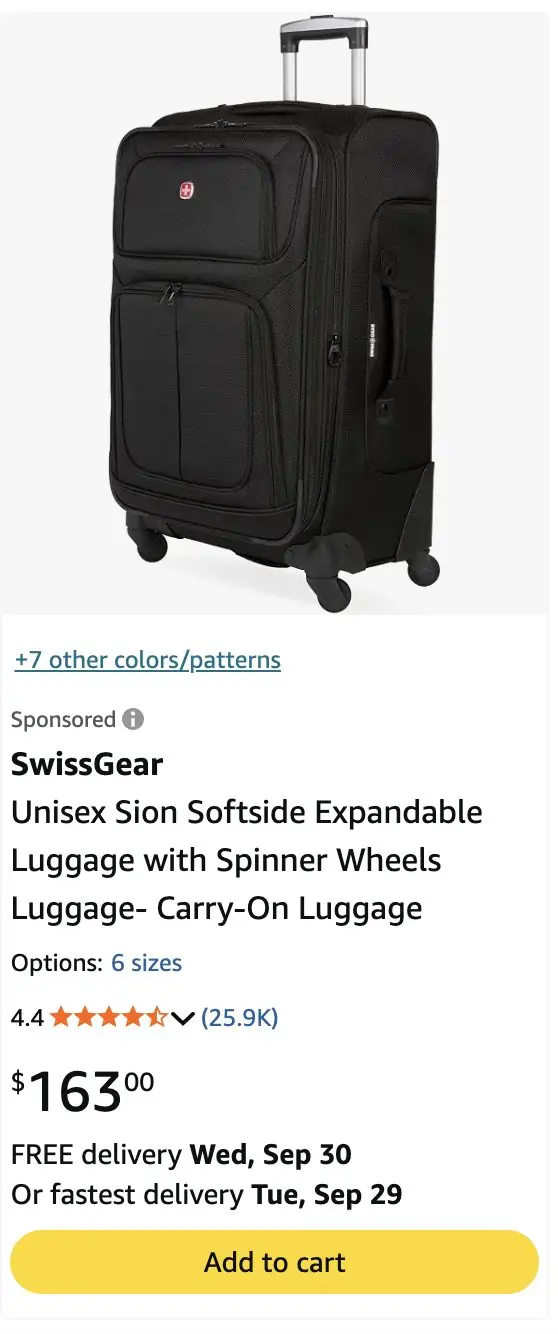
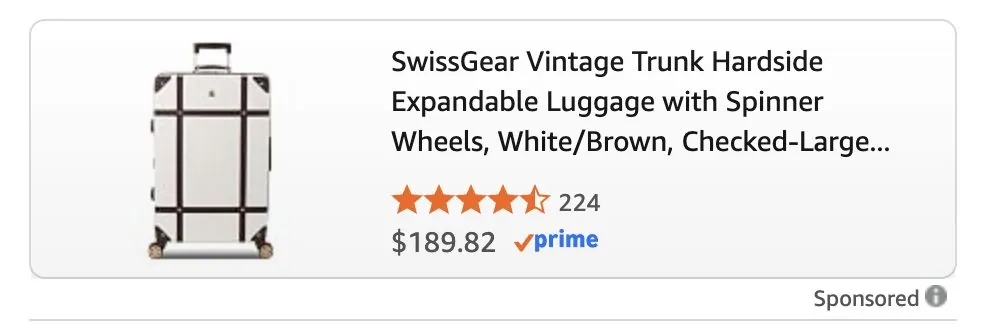
Amazon advertising supported every launch and key promotion, so new products were visible from day one and best sellers held their ranking through peak season.
Sponsored Products covered the catalogue, Sponsored Brands sent shoppers to the Brand Store with headline and video placements, and budgets moved with the calendar. Performance was tracked against return on ad spend and fed back into keyword and bid decisions.
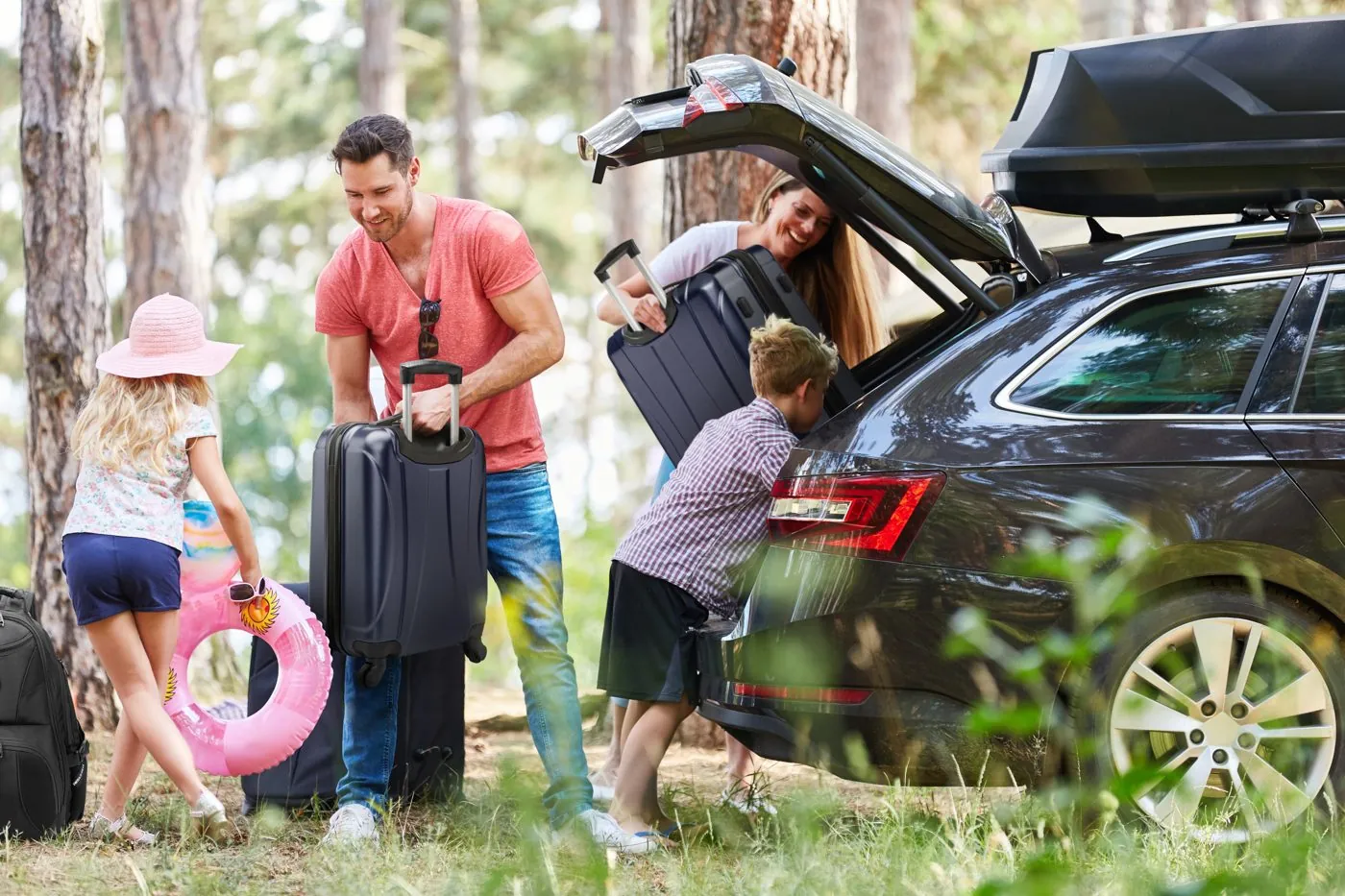
Reviews decide most luggage purchases, so every launch had a review plan. New products went into Amazon Vine, sampling programs put product in the hands of real travellers, and product video and customer review videos went onto the listings so shoppers could see the size and quality for themselves.
Review and sentiment reporting went back to the product team, so recurring questions became new infographics and recurring complaints became product fixes.


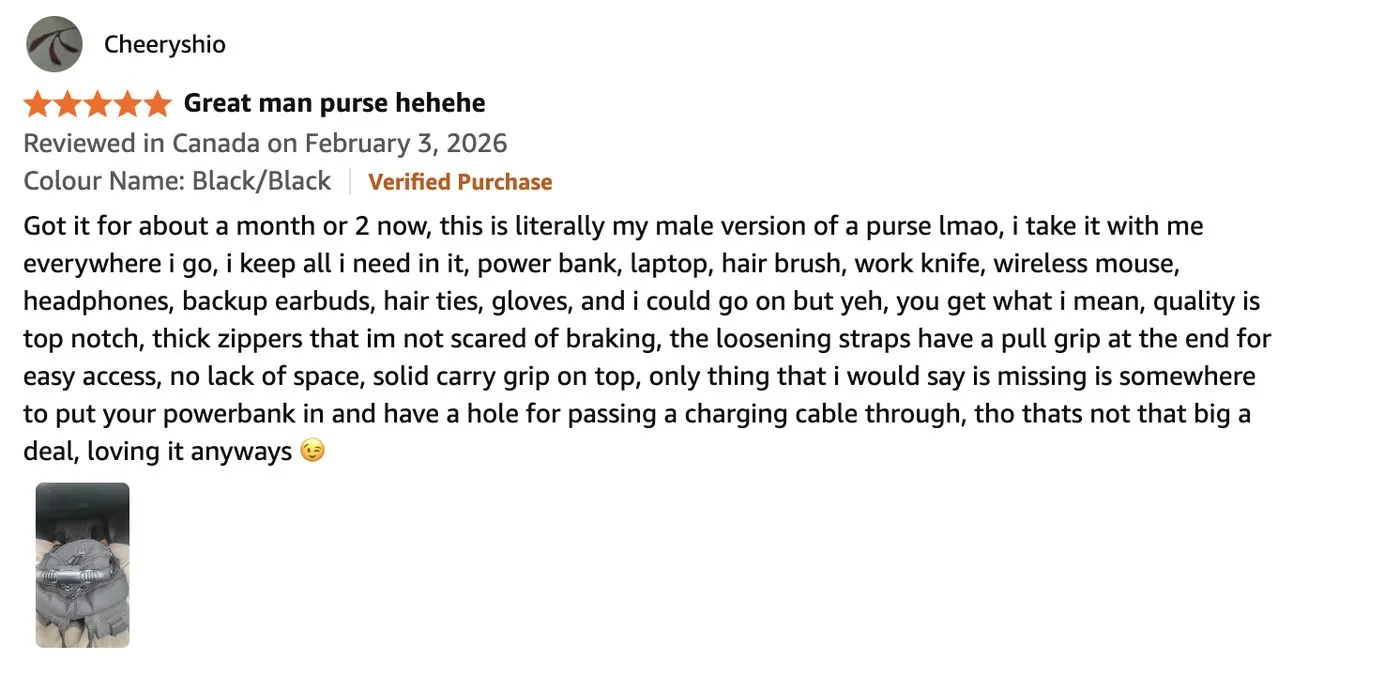
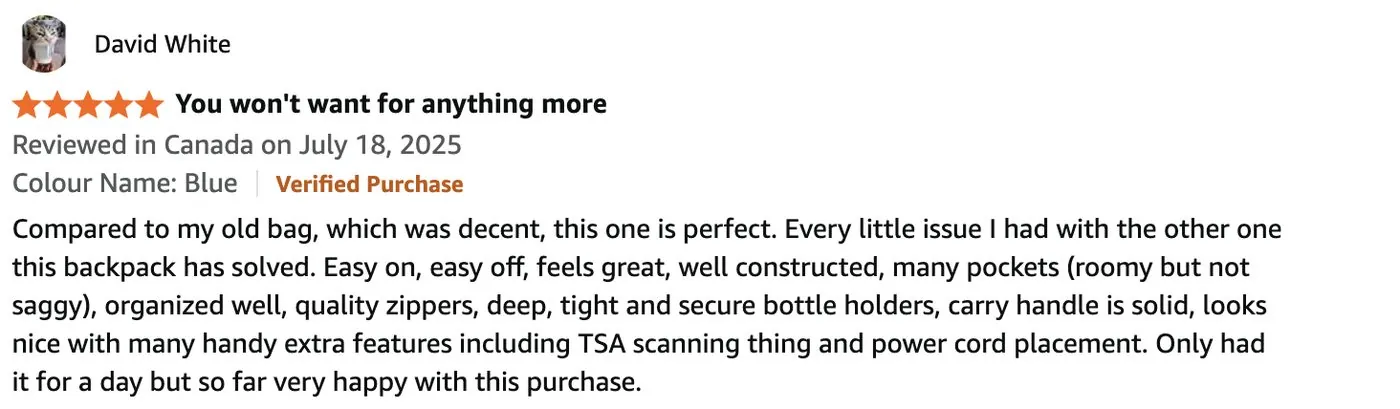
I built Looker Studio and Excel reporting that put Amazon next to the website, so the board saw one view of the business: sales, traffic and conversion by product, advertising spend and return, and review ratings across the catalogue.
Every launch and promotion got a post-mortem, and the findings shaped the next month’s listing updates, ad budgets and inventory requests.


From the first listing to the Brand Store, ads and reviews, I build Amazon channels that look like the brand and are built for how people shop.
Get in touch Amazon work